
Why it matters
Why live extraction?
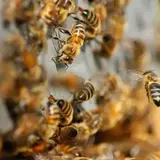
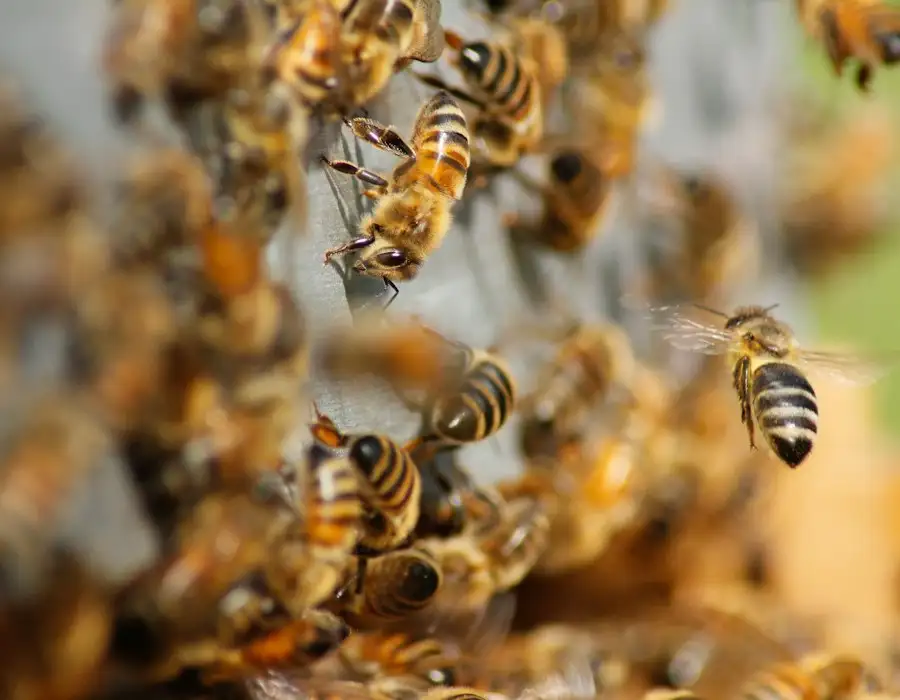
Bees are a vital part of our ecosystem. We always carry out live removal and rehoming rather than extermination, working with local beekeeping societies to give colonies a new home.
If bees have moved into your chimney, roof void, wall cavity or garden, we will assess the situation, identify the species and carry out a safe extraction with as little disruption to your property as possible.
Know your pest
Which bees need removing?
- Honey bees most often need extraction, when they swarm or nest in a building. We rehome the colony with a local beekeeper.
- Bumblebees are generally harmless and leave naturally at the end of the season. We advise on managing the risk and how long they are likely to stay.
- Solitary bees rarely need any intervention. Management is usually about the building, such as repointing brickwork to remove nesting holes.
Know your pest
Is it a swarm or a nest?
This is one of the most common questions we get. The answer changes how urgent it is, how the bees are removed and whether they will move on by themselves.
Temporary
Bee swarm
- A colony on the move: a queen and thousands of workers looking for a new home
- Clusters on a branch, wall or fence post for a few hours to a few days
- Generally docile and low risk
- Often moves on without help
- If it is in an awkward spot, we can collect and rehome it quickly
Permanent
Bee nest
- An established colony inside a chimney, roof void or wall cavity, building comb
- Will not move on and grows through the season
- Honeycomb left in a building can cause damage and damp and attract other pests
- Needs full extraction, sterilisation and proofing
- The earlier it is dealt with, the easier it is
How we work
How extraction works
- SurveyWe find where the bees are getting in, inspect the building and decide the safest way to extract them.
- Access and extractionWe safely open up the nest, including in chimneys, soffits and wall cavities, and remove the colony with all of its honeycomb.
- SterilisationWe sterilise the void and reinstate the building fabric so leftover wax and honey do not attract other pests.
- RehomingThe colony goes to a local beekeeper or beekeeping society.
- ProofingWe seal the entry points so bees do not move back in, and let you know about anything else we noticed in the building.
What we do
Where we find bees
- Chimney stacks and flues
- Roof voids and lofts
- Wall cavities and airbricks
- Soffits and fascias
- Garden sheds and outbuildings
- Underground nests (bumblebees)
Spot the signs
Warning signs
- Lots of bees around one point on the building
- Bees going in and out of a gap repeatedly
- Buzzing inside walls or ceilings
- Wax or honey staining through plaster
- A swarm resting on the building or a tree
- Bees appearing inside the house