What we found and what we did
We were called to a tall brick building in Boston where bees had moved into one of the chimneys. To a swarm looking for a home, a chimney can seem a lot like a hollow tree: a dry, sheltered space with a narrow way in at the top. That is why bees settle in them from time to time.
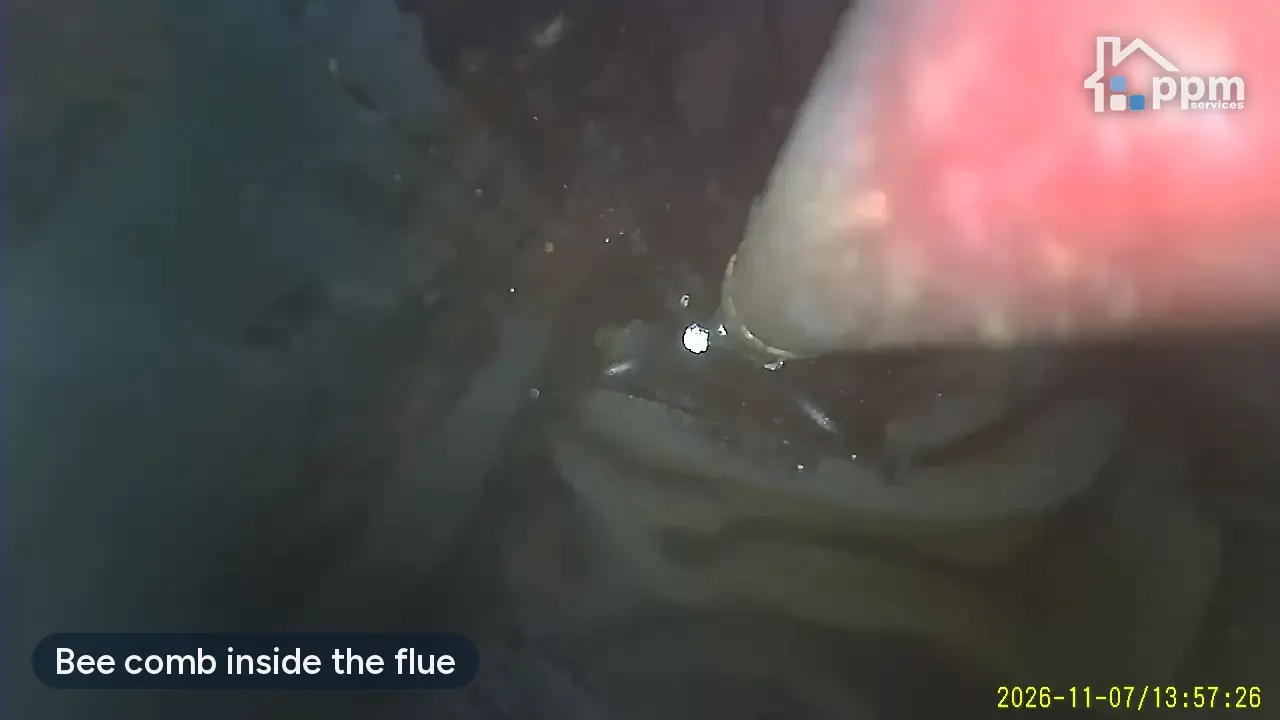
Before deciding how to tackle it, we put an inspection camera into the flue. The footage showed pale layers of comb built inside the chimney, which told us the colony had settled in rather than just passing through.
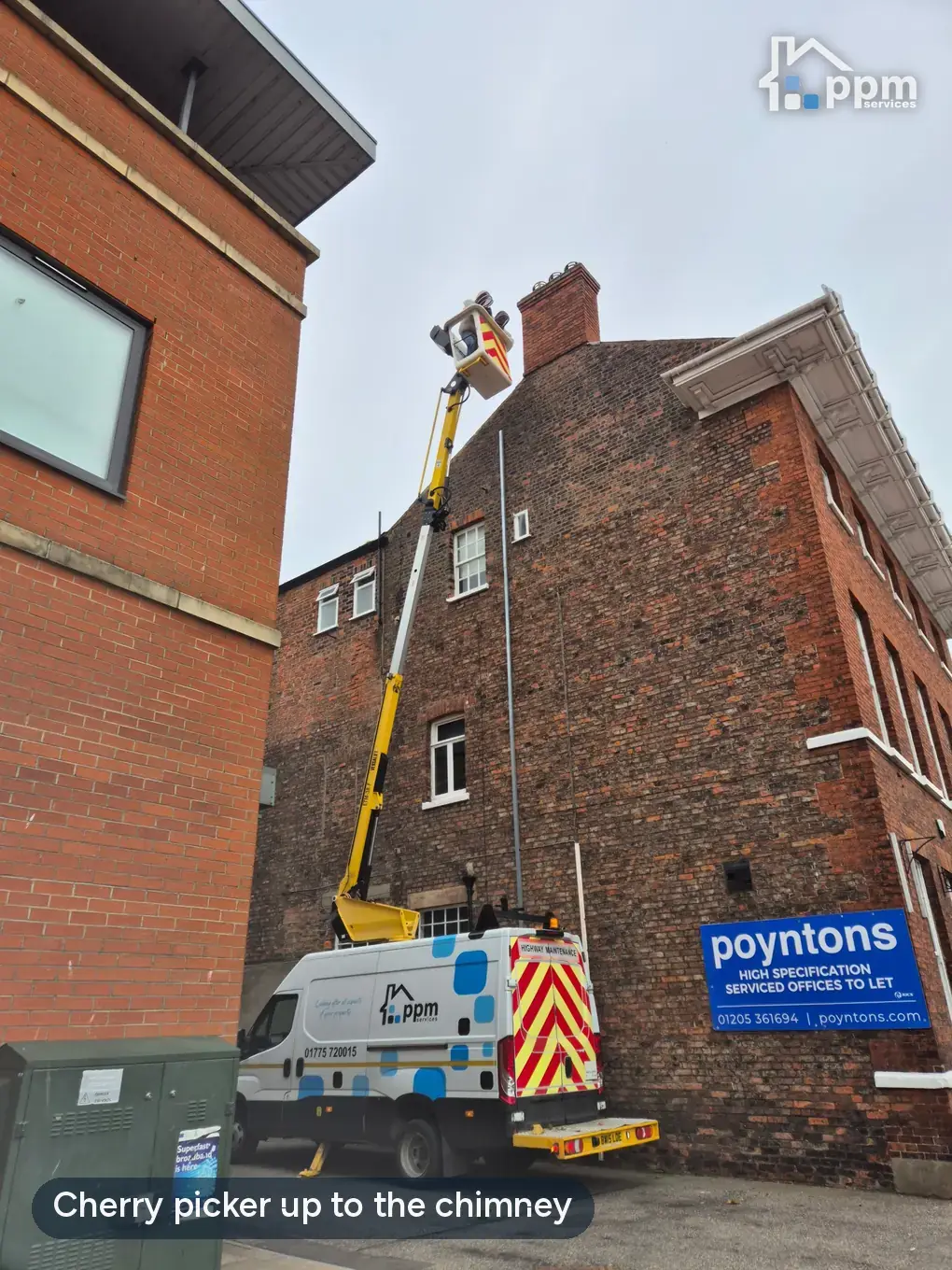
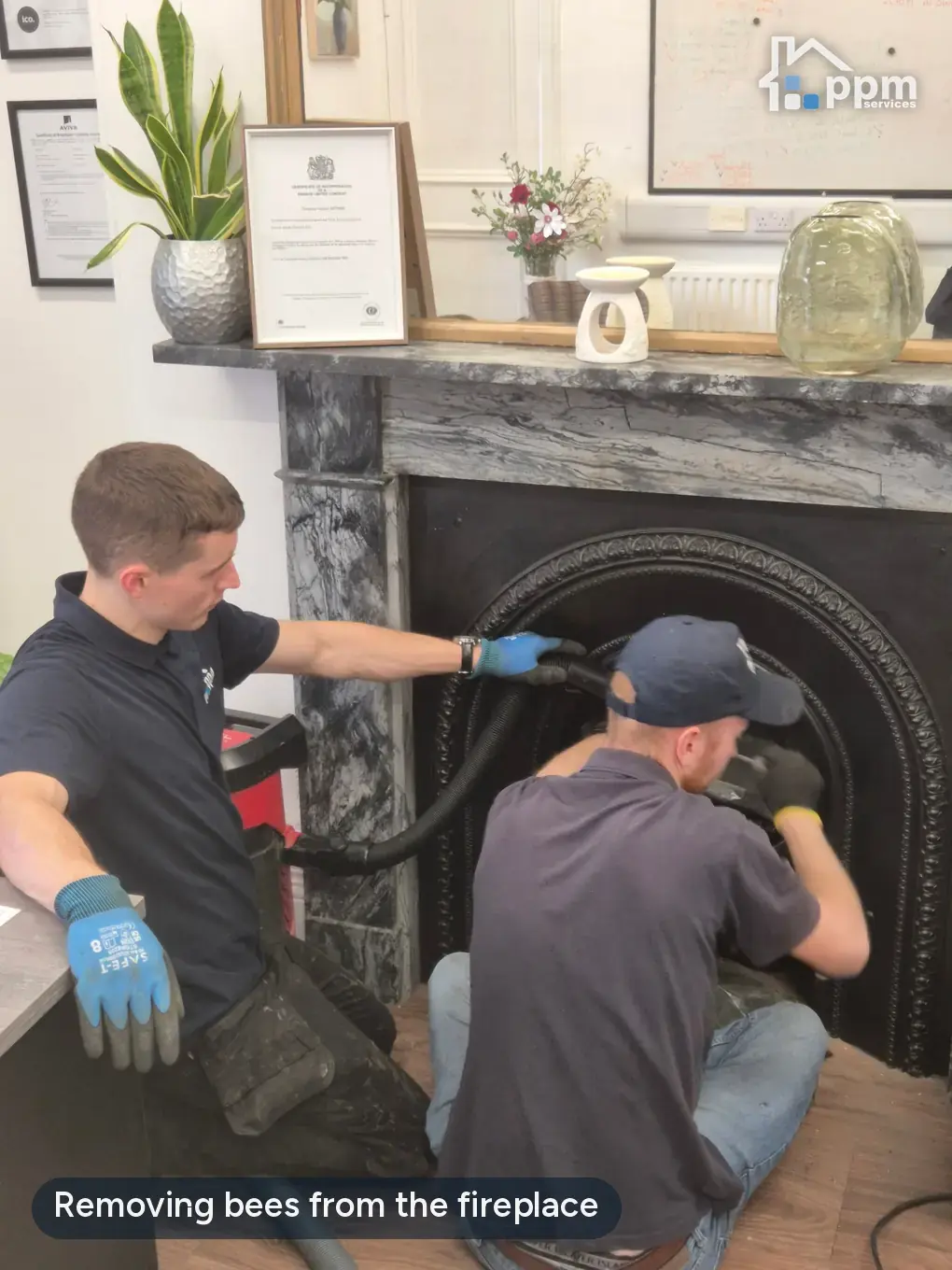
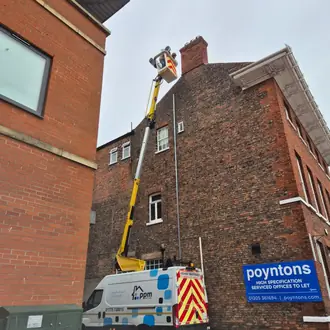
Because the chimney was high up and the colony sat inside the flue, we worked on it from both ends. Our cherry picker lifted us up alongside the chimney stack so we could work safely at height from the top. Down below, two of the team knelt at the office fireplace, feeding a specialist vacuum hose up through the opening to draw the bees out alive.
We chose to remove the bees alive rather than treat them. Honey bees are valued pollinators, and live extraction means the colony can be moved on rather than destroyed. Working from the fireplace as well as from the top also meant we could reach the bees where they were living, not only at the way in.
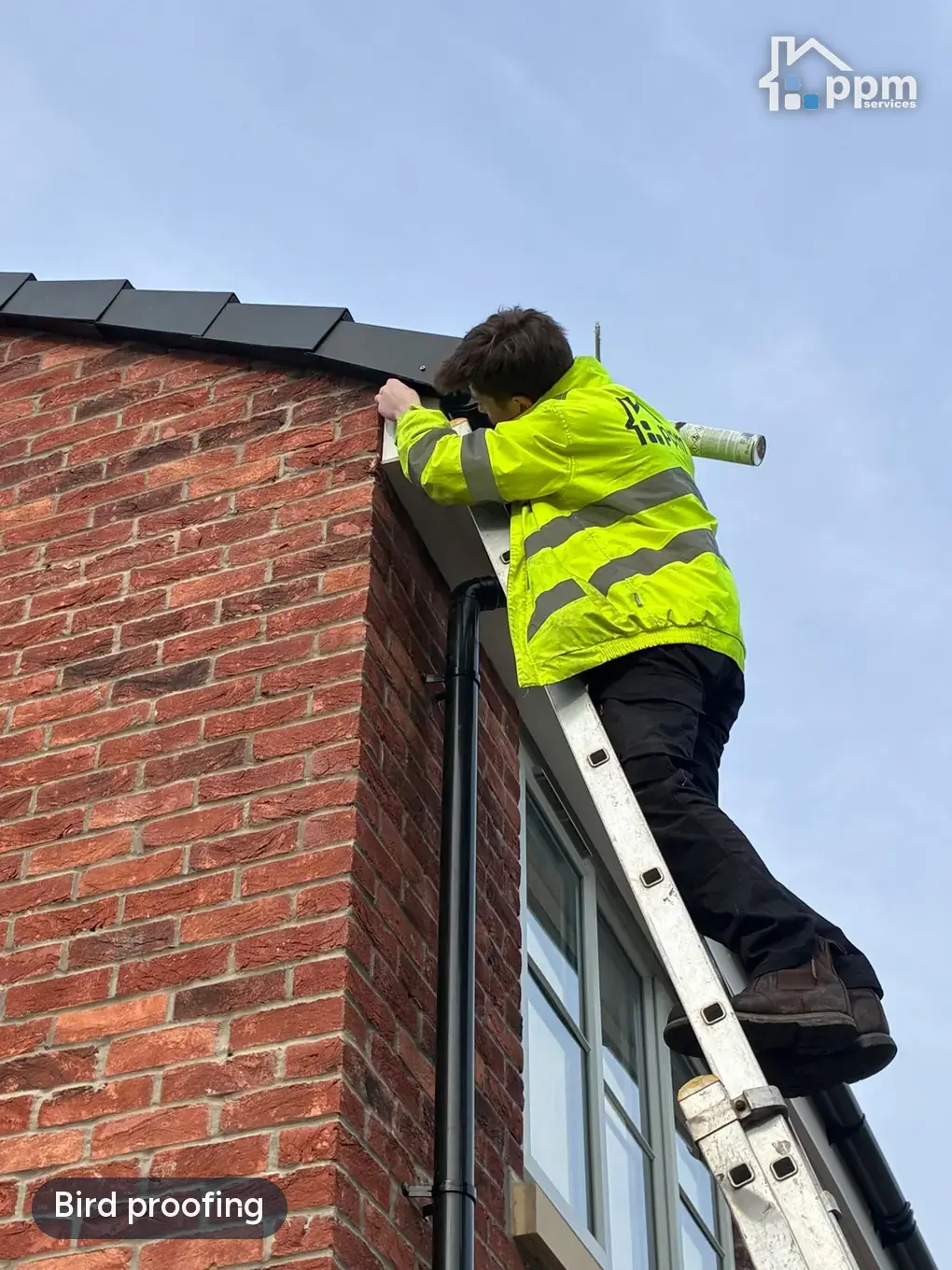
The next step is proofing the chimney pots. Bees are often drawn to places where a colony has lived before, so closing off the way in at the top is what helps stop a new swarm from moving back in. We are due to return to the building to do this and finish the job.
Need help with live bee extraction in Boston?
Read more about how we deal with it on our live bee extraction page, or see what else we do around Boston. For a free quote, call us on 01775 720015 or use the form below. Many jobs can be priced over the phone or from a photo.